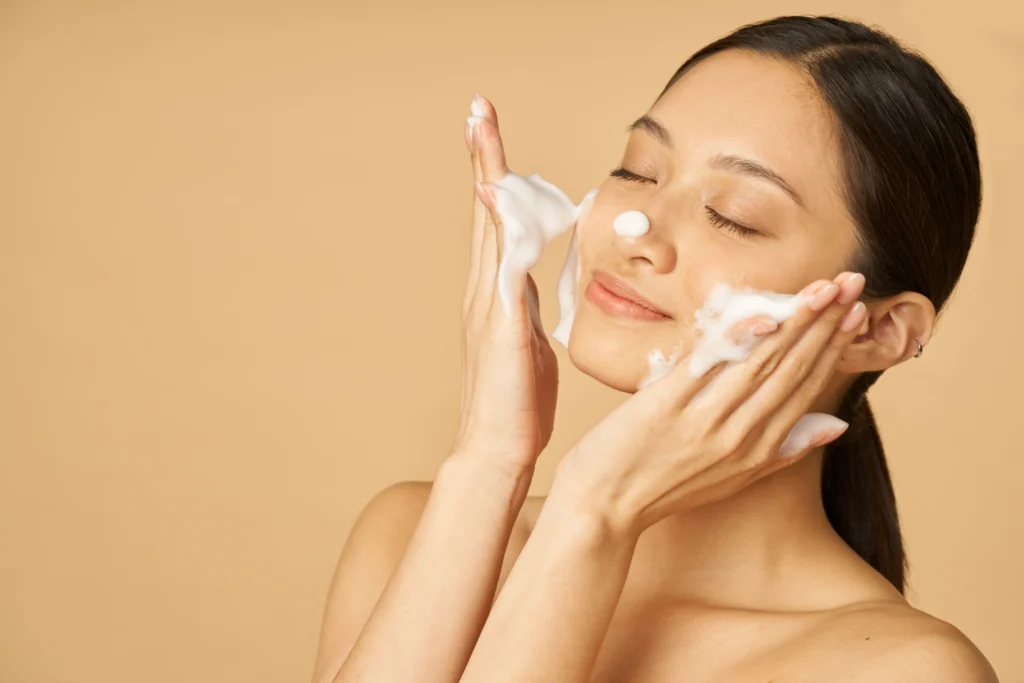
Do Cleansers Really Make a Difference?
Short answer: yes, significantly. But the longer answer is more interesting — because the right cleanser doesn’t just clean your skin. It sets up everything else in your routine to actually work.
Most people treat cleansing as the least important step. It’s the thing you do before the “real” skincare. But that thinking is backwards. If you’re cleansing with the wrong formula for your skin type, or skipping it when it matters most, you’re undermining every serum, moisturizer, and treatment product that follows.
Here’s what’s actually happening when you cleanse — and how to do it in a way that works for your skin.
What Your Skin Deals With Every Day
By the end of a typical day, your skin has accumulated a mix of:
Sebum — your skin’s natural oil, which is beneficial in controlled amounts but can mix with dead skin cells to clog pores when it builds up.
Environmental pollution— particulate matter, exhaust, and other airborne particles that settle on the skin and generate free radical damage. Research from the American Academy of Dermatology confirms that pollution exposure is a meaningful contributor to premature skin aging and uneven tone.
Makeup and SPF — both are designed to adhere to skin and don’t rinse off with water alone.
Sweat and bacteria — particularly relevant if you’re active or live in a humid climate.
Product residue — leftover moisturizer, sunscreen, and other products that weren’t fully absorbed during the day.
None of this causes immediate visible damage, but it accumulates. Over time, it congests pores, disrupts the skin barrier, and makes your skin less receptive to the products you’re applying on top of it. A proper cleanser clears all of it efficiently without causing damage in the process.
The Acid Mantle: Why pH Matters More Than You’d Think
Your skin has a naturally acidic surface layer called the acid mantle — a thin film of sebum and sweat that maintains a pH of around 4.5 to 5.5. This slightly acidic environment does two important things: it keeps moisture in and it keeps harmful microbes out.
When you use a cleanser that’s too alkaline (like traditional bar soap, which often sits at pH 9 to 10), you temporarily disrupt that acid mantle. The skin becomes more permeable, loses moisture faster, and becomes more vulnerable to bacteria and irritants. You might notice this as that tight, dry, or “squeaky clean” feeling after washing — which sounds like it should feel clean but is actually a sign the barrier has been stripped.
According to research reviewed by the National Institutes of Health, maintaining the skin’s natural pH is directly linked to barrier function, moisture retention, and protection against pathogenic bacteria. A well-formulated, pH-balanced cleanser removes impurities without disrupting that balance.
This is a significant reason to look beyond whatever soap or body wash you have on the shelf. Skincare-specific cleansers are formulated to work with your skin’s chemistry, not against it.
Choosing the Right Cleanser for Your Skin Type
This is where most people go wrong — using whatever cleanser looked good on the shelf without considering whether it matches their skin. Esthetic Formula offers options across every skin type, so here’s how to think about it:
Dry, Mature, or Sensitive Skin
Your skin is already producing less oil and has a more fragile barrier. A foaming or gel cleanser with strong surfactants will strip the little moisture you have and leave skin even drier. What you need is a cream or lotion-based cleanser — something with emollients that cleans gently and leaves a slight conditioning feel on the skin.
Look for: sulfate-free formulas, hydrating ingredients, fragrance-free. Our cleansers and scrubs collection includes oil-free options specifically formulated for sensitive and mature skin that cleanse without drying. Our Balancing Facial Wash works well for this skin type — gentle, non-stripping, and effective at removing impurities without disrupting the barrier.
Oily or Acne-Prone Skin
You need a cleanser that removes excess oil and clears pores without triggering the rebound oil production that comes from over-stripping. A gel cleanser with surfactants calibrated for oily skin gets this balance right.
Look for: oil-free, non-comedogenic, and ideally with a mild active ingredient like salicylic acid for additional pore-clearing benefit. Our collection includes a cleanser specifically formulated for oily and acne-prone skin. Pair with our acne correctives for a more targeted approach to breakouts.
Combination Skin
Some areas need gentle cleansing, others need more. A balanced gel cleanser that’s effective but not aggressive usually works well — something that controls oil in the T-zone without stripping the drier cheek areas.
Normal Skin
You have the most flexibility, but that doesn’t mean any cleanser will do. A sulfate-free gel or light lotion cleanser keeps things working well without introducing problems.
A universal rule across all types: avoid added fragrance if you have any sensitivity at all. Fragrance is the most common contact irritant in skincare and adds no skin benefit whatsoever.
Morning vs. Night: Should You Cleanse Twice a Day?
Yes, but for different reasons.
Morning cleansing removes the overnight accumulation of sebum, dead skin cells, and any product residue from your PM routine. It also preps your skin so your morning SPF and serum absorb properly instead of sitting on top of a film of oil.
Night cleansing is the more important of the two. This is when you remove everything your skin dealt with during the day — pollution, makeup, sunscreen, sweat. Skipping your evening cleanse is the single most reliable way to cause congestion, dullness, and breakouts over time. Everything you applied that morning sits on your skin all night, and your pores spend hours in contact with accumulated impurities instead of in recovery mode.
If you wear makeup, a two-step cleanse at night makes a noticeable difference: a makeup-removing micellar water or oil cleanser first, then your regular cleanser. This ensures nothing is being pushed deeper into the pore during the main cleanse.
How to Get the Most Out of Your Cleanser
Most people underestimate how much technique matters here. Even a great cleanser delivers limited results if you rush through it.
Use lukewarm water. Hot water feels satisfying but strips the skin’s natural oils and aggravates the acid mantle. Cold water doesn’t allow the cleanser to emulsify and work properly. Lukewarm is the right temperature.
Give it 60 seconds. Apply a small amount to slightly damp skin and massage gently for at least 30 to 60 seconds. This gives the cleanser enough time to break down and lift sebum, product residue, and impurities from the pore. A quick 10-second rinse doesn’t get the job done.
Rinse thoroughly. Cleanser residue left on the skin can cause irritation and interfere with whatever you apply next. Rinse until the water runs clean.
Pat dry, don’t rub. A clean towel, patted gently. Rubbing with a towel creates unnecessary friction on skin that’s just been cleansed.
Apply your next product immediately.Within two to three minutes of cleansing, your skin is at peak receptivity for the products that follow. This is the ideal time to apply a toner, serum, or moisturizer. Our tonics and fresheners and serums are formulated to be applied right after cleansing for best absorption.
What Good Cleansing Makes Possible
Here’s the part worth understanding: cleansing isn’t just about being clean. It’s about what it enables.
Your Vitamin C Serum absorbs more effectively into freshly cleansed skin. Your Collagen Peptide Cream delivers more deeply. Your salicylic acid products can actually reach the pore instead of sitting on a layer of oil and residue. Peels and masks work dramatically better on clean skin.
A good cleanser used consistently is what makes the rest of your routine worth investing in.
What to Look for on the Ingredient Label
You don’t need to memorize every chemical name, but a few things are worth watching for:
Sulfate-free is better for most skin types. Sodium lauryl sulfate (SLS) and sodium laureth sulfate (SLES) are effective cleansers but can be too stripping for anyone with dry, sensitive, or compromised skin.
Glycerin near the top of the list is a good sign. It’s a humectant that helps offset any moisture loss from cleansing.
Calming botanicals add real value.Aloe vera, chamomile, and similar plant extracts help offset any mild irritation from cleansing, especially in formulas designed for sensitive skin. EF’s formulations pair functional cleansing ingredients with calming botanicals — consistent with our philosophy of combining scientific performance with natural skin support. Learn more about how we formulate.
Avoid fragrance if you have sensitive or acne-prone skin. There’s no benefit for the skin — fragrance compounds are added purely for consumer perception and are a leading cause of contact dermatitis.
Build Your Routine from the Ground Up
Cleansing is step one in every routine we’d recommend — morning and night. Get this step right and everything that follows performs better.
At Esthetic Formula, we’ve formulated cleansers for every skin type — from oil-free gel formulas for oily and acne-prone skin to gentle cream cleansers for dry and mature skin. Browse our cleansers and scrubs collection to find the right one for your skin. And if you want to understand our full approach to professional-grade formulation, visit our about us page or contact our team directly.
Frequently Asked Questions
Is washing your face with just water enough? \No. Water alone can’t dissolve oil-based substances like sebum, sunscreen, or makeup. A surfactant-based cleanser is needed to emulsify and lift those off the skin surface.
Can cleansing too often damage your skin?
Yes. More than twice a day for most people is unnecessary and can strip the acid mantle and barrier lipids. If your skin feels tight, dry, or reactive after cleansing, you may be over-washing or using a formula that’s too harsh for your skin type.
Why does my skin feel tight after cleansing?
That “squeaky clean” feeling is not a sign of a thorough cleanse — it’s a sign the cleanser has stripped your skin’s natural oils. Switch to a gentler, sulfate-free formula appropriate for your skin type.
Should I use a separate makeup remover before cleansing?
If you wear foundation, mascara, or waterproof SPF, yes. A double-cleanse (micellar water or cleansing oil first, then your regular cleanser) ensures everything is removed without pushing product residue deeper into the pore during your main cleanse.
Does the order of skincare products after cleansing matter?
Yes, significantly. Apply products thinnest to thickest: toner or freshener, serum, moisturizer, then SPF in the morning. Browse our full shop to build out each step of your routine.
Esthetic Formula, Inc. — Professional Skincare Since 1985 | estheticformula.com