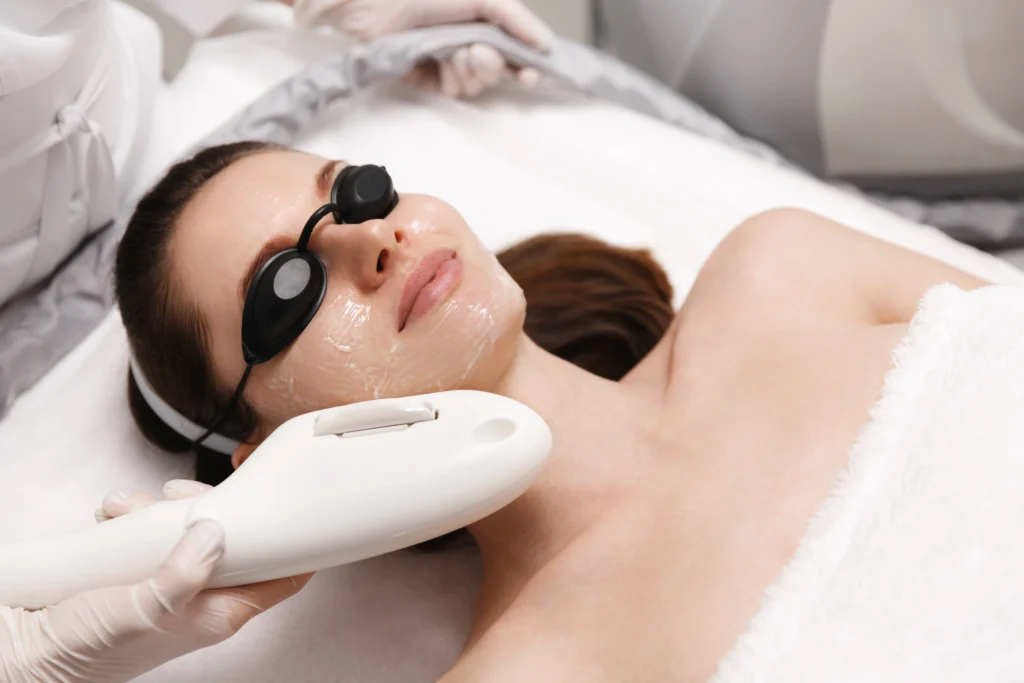
Laser Resurfacing: What to Do Before and After
Laser resurfacing is one of the most effective treatments available for smoothing skin texture, fading hyperpigmentation, reducing acne scars, and stimulating collagen production. The results can be genuinely transformative — but the treatment itself is only part of the equation.
How you prepare your skin beforehand and how you care for it during recovery determines a lot of how well you heal, how much discomfort you experience, and how dramatic your final results are. Get it wrong and you risk prolonged redness, post-inflammatory hyperpigmentation, or infection. Get it right and your skin comes back stronger, clearer, and noticeably more youthful.
Here’s what you need to know — before and after.
Understanding What Laser Resurfacing Actually Does
Before getting into skincare tips, it helps to understand what’s happening to your skin during the treatment.
Laser resurfacing uses concentrated light energy to heat and damage skin tissue in a controlled way, triggering the body’s wound-healing response. That response stimulates new collagen production and accelerates cell turnover, replacing damaged skin with fresh, healthier tissue.
The two main categories are:
Ablative lasers (CO2, Erbium) remove the outer layers of skin entirely. These produce the most dramatic results — effective for deep wrinkles, significant sun damage, and acne scarring — but involve a real recovery period of one to three weeks and more noticeable side effects like swelling, redness, and crusting.
Non-ablative lasers (Fractional, Pulsed-Dye) heat the skin without removing surface layers, stimulating collagen more gradually. Less downtime, milder side effects, but typically require multiple sessions to achieve comparable results.
Your dermatologist or esthetic physician will determine which is appropriate for your skin concerns, tone, and history. What applies to skincare prep and recovery is largely consistent across both categories, though the intensity and duration of recovery differs.
According to the American Academy of Dermatology, laser resurfacing is most effective when the skin is properly prepped and post-care is followed carefully — which is exactly why this preparation matters as much as the treatment itself.
Before Your Treatment: Preparing Your Skin
4 to 6 Weeks Out
Get a consultation — don’t skip it. A thorough consultation with your treating physician isn’t just recommended, it’s essential. Your doctor needs to assess your skin type, discuss your goals, review your medication history, and potentially order a patch test. This is also when you’ll learn whether pre-treatment with hydroquinone or other brightening agents is appropriate for your skin tone to prevent post-inflammatory hyperpigmentation.
Start protecting your skin from the sun now.UV-damaged or tanned skin before a laser treatment is a risk factor for complications. Your skin needs to be at its baseline — not reactive, not sunburned, not freshly tanned. Daily SPF 30+ is non-negotiable in the weeks leading up to your appointment. Our Moisturizing Sunscreen SPF 30 with TiO2 is a mineral option that’s gentle and effective for daily use. See our full solar care collection.
1 to 2 Weeks Out
Stop aggressive actives. Retinoids, retinol, glycolic acid, salicylic acid, and other exfoliating actives should be paused at least one week before treatment — two weeks is safer. These ingredients increase skin cell turnover and sensitivity, which can amplify the inflammatory response from laser treatment beyond what’s needed.
Avoid anything that increases photosensitivity. This includes certain antibiotics (doxycycline, tetracycline), some acne medications, and high-dose Vitamin C. Your doctor will give you a specific list based on your medication history.
Simplify your routine.In the week before, focus on gentle cleansing and solid moisturization. Nothing new, nothing active, nothing harsh. The goal is to go into the treatment with your barrier in good shape. Our cleansers and scrubs collection has gentle, pH-balanced options appropriate for this phase, including our Balancing Facial Wash.
Stay hydrated.Well-hydrated skin heals more efficiently. This means drinking enough water and keeping your skin moisturized in the days leading up to treatment. Our Collagen Peptide Cream is a good choice for this phase — deeply hydrating without being heavy or pore-clogging.
After Your Treatment: The Recovery Phases
Recovery from laser resurfacing is not one stage — it unfolds in phases, and what your skin needs changes week by week.
Days 1 to 3: Protect and Soothe
Immediately after treatment your skin will be red, sensitive, and likely swollen. For ablative treatments, blistering and crusting are expected. This is normal — it’s the inflammatory response doing its job.
Your only job right now is to keep skin clean, protected, and calm.
Cleanse very gently.Use the mildest, sulfate-free cleanser available — lukewarm water, no rubbing, pat dry. Our Balancing Facial Wash or another fragrance-free gentle cleanser from our cleansers collection works well here. Your doctor may also provide a specific wound-wash solution for the first 24 to 48 hours.
Moisturize immediately and often.Post-laser skin loses moisture rapidly. Keeping it consistently hydrated speeds healing and reduces the tightness and discomfort that can otherwise be significant. Our Collagen Peptide Cream applied at least twice daily in the first weeks helps maintain hydration and supports the collagen remodeling the laser just initiated. Browse our anti-inflammatory and healing products for additional options.
Do not pick, rub, or peel. It cannot be overstated. Removing crusting or peeling skin before it’s ready disrupts the healing tissue underneath and significantly increases the risk of scarring and pigmentation issues.
Avoid heat. Hot showers, saunas, steam rooms, heavy exercise — anything that raises skin temperature should be avoided for the first several days. Heat promotes swelling and inflammation.
Days 4 to 7: Active Healing
Redness begins to subside. Peeling and flaking will increase as the outer layer of damaged skin sheds — this is the process working as intended. Keep the skin moist and let it shed on its own.
Continue gentle cleansing twice daily. Continue moisturizing. No actives whatsoever.
Introduce SPF.Once your doctor gives the go-ahead (typically after the first few days), daily SPF becomes critical. Post-laser skin is highly photosensitive — even brief sun exposure can cause significant hyperpigmentation on newly resurfaced skin. Our Moisturizing Sunscreen SPF 30 with TiO2 uses mineral (physical) filters that are far less likely to irritate healing skin than chemical sunscreen formulas.
Week 2: Rebuilding
Most of the peeling and surface crusting has resolved for non-ablative treatments. Ablative treatment patients may still be in active healing.
Your skin will look pink and feel more sensitive than usual for several weeks. This is normal.
Vitamin C can be introduced at this stage— typically around the 72-hour mark for mild treatments, or after day 7 to 14 for ablative procedures, always based on your doctor’s guidance. Post-laser skin is particularly receptive to Vitamin C because the fresh surface allows deeper penetration. Its antioxidant properties protect the new skin from environmental damage while its collagen-synthesis support amplifies the remodeling already happening. Our Vitamin C Serum can be applied once daily to start, building to twice daily as tolerated. We’ve written more about why Vitamin C and collagen peptides work so well together in our post on The Powerhouse Duo.
Continue avoiding: retinoids, AHAs, BHAs, physical exfoliants, fragrance, alcohol-based products.
Weeks 3 to 6: Gradual Reintroduction
Redness continues fading. Skin texture and tone begin to noticeably improve. Collagen remodeling, which started with the treatment, continues for months.
This is when you can begin reintroducing gentle actives — starting with lower concentrations and less frequent application than your normal routine. Retinoids and AHAs typically come back last, and only once the skin shows no signs of active sensitivity or reactivity.
Continue daily SPF without exception. Post-laser skin remains photosensitive for up to three months, and UV exposure during this window is the most common cause of post-treatment hyperpigmentation.
What to Avoid the Entire Recovery Period
To be explicit about what dermatologists consistently flag as risks during laser recovery:
Fragrance and alcohol in any skincare product — both are irritants that can cause contact dermatitis on compromised skin.
Physical exfoliants — scrubs, brushes, cleansing devices — anything that creates friction on skin that is in the process of rebuilding.
Swimming in chlorinated pools — chlorine is a skin irritant and a contamination risk for skin that hasn’t fully closed.
Makeup (especially foundation) — most doctors recommend avoiding it for at least the first week. When you do return to makeup, avoid anything with fragrance or potential irritants.
Unprotected sun exposure — even incidental exposure matters during this window. A hat plus SPF is the baseline for going outdoors.
Building Your Post-Laser Skincare Routine
Here’s a simplified routine that works across the recovery period, adjusting what’s included based on your stage:
Morning:
- Gentle, sulfate-free cleanser (Balancing Facial Wash)
- Vitamin C Serum — week 2 onward, with your doctor’s guidance (Vitamin C Serum)
- Collagen Peptide Cream — applied twice daily in early recovery (Collagen Peptide Cream)
- SPF 30+ mineral sunscreen — every single day (Moisturizing Sunscreen SPF 30)
Evening:
- Gentle cleanser
- Collagen Peptide Cream
- (Week 3+ only) Gradual reintroduction of your normal actives as tolerated
Stay consistent. Recovery timelines vary by treatment type and individual skin, but the principles — gentle cleansing, consistent moisture, strict sun protection, no aggressive actives — apply to everyone.
One Final Note on Follow-Up Appointments
Don’t skip them. Your dermatologist or esthetic physician needs to see how your skin is healing to catch any complications early (infection, unexpected pigmentation changes, prolonged redness) and adjust your aftercare plan if needed. Post-laser skin can behave unpredictably, and the professionals who treated you are the best equipped to guide your recovery.
At Esthetic Formula, we’ve been formulating professional-grade skincare products since 1985, with close attention to sensitive and post-procedure skin needs. Learn more about our formulation approach or browse our full shop to build out your pre and post-laser routine. Have questions? Our team is here to help.
Frequently Asked Questions
When can I wear makeup after laser resurfacing? Most dermatologists recommend avoiding makeup for at least the first week after ablative laser treatments, or the first few days after non-ablative. Mineral makeup with no fragrance or potential irritants is usually the safest first choice when you do return to it.
How long until I see final results? Surface results — clearer texture, more even tone — are visible within two to four weeks as healing completes. But the deeper benefit of laser resurfacing — collagen remodeling — continues for three to six months after the treatment. The full result isn’t visible until that process completes.
Can I use my regular moisturizer after laser?Potentially yes, depending on the formula. It should be fragrance-free, free of retinoids and exfoliating acids, and not occlusive enough to suffocate healing skin. Our Collagen Peptide Cream is appropriate — deeply hydrating, non-comedogenic, and formulated to support the skin barrier.
Is laser resurfacing safe for all skin tones? This is an important question to discuss thoroughly with your treating physician. Certain laser types carry higher risk of post-inflammatory hyperpigmentation in darker skin tones. Your doctor may recommend specific pre-treatment protocols, including hydroquinone, to minimize this risk.
What’s the best sunscreen to use after laser?Mineral (physical) sunscreens using zinc oxide or titanium dioxide are strongly preferred over chemical filters during recovery. They sit on top of the skin rather than being absorbed, and they’re far less likely to cause irritation or stinging on healing skin. Our Moisturizing Sunscreen SPF 30 with TiO2 fits this criteria.
Esthetic Formula, Inc. — Professional Skincare Since 1985 | estheticformula.com