How to Pick the Right Moisturizer for Your Skin Type
Walk into any store and the moisturizer aisle is overwhelming. There are creams, gels, lotions, serums, ointments — each one promising something different. And since moisturizer is the one step almost everyone agrees you need, it’s worth knowing how to actually choose the right one instead of just grabbing whatever looks good.
The short version: moisturizers are not one-size-fits-all. The right one depends on your skin type, what your skin is dealing with right now, and what ingredients you need most. This guide breaks all of it down.
What a Moisturizer Is Actually Doing
Before getting into types and ingredients, it helps to understand what’s happening at the skin level.
Your skin has a protective outer layer called the stratum corneum. Its job is to keep moisture in and irritants out. When that barrier is working well, skin feels comfortable, stays hydrated, and holds up against environmental stress. When it breaks down — from age, weather, harsh products, or certain skin conditions — water escapes too easily, and the skin becomes dry, tight, and reactive.
Moisturizers work by stepping in to support that barrier. Depending on their formula, they either attract water into the skin, trap moisture already there, or fill in gaps in the skin’s surface. Most good moisturizers do a combination of all three, which is why ingredient lists matter so much.
The American Academy of Dermatology recommends moisturizing as a daily essential for all skin types — not just dry skin — because a healthy barrier is the foundation everything else depends on.
The Three Types of Moisturizing Ingredients (and What They Do)
Most moisturizers blend these three categories. Knowing how each works helps you read a label and understand what you’re buying.
Humectants pull water into the skin from the environment and from deeper layers of the dermis. They’re what makes skin feel instantly more hydrated. Hyaluronic acid and glycerin are the most common and most effective. They work best when followed by something that seals the moisture in.
Emollients fill in the gaps between skin cells, smoothing texture and creating a softer, more supple surface. Think of plant oils, shea butter, and fatty acids. They don’t just sit on top — they integrate into the skin barrier and help repair it over time.
Occlusives form a physical layer over the skin that slows water evaporation. Heavier ingredients like petroleum jelly or beeswax are classic occlusives, but lighter formulas use smaller amounts of occlusive oils to achieve the same effect without feeling greasy.
According to research published by the National Institutes of Health, combining humectants and occlusives is consistently more effective than using either alone — which is why the best moisturizers layer multiple ingredient types.
Choosing by Skin Type
Dry or Mature Skin
Dry skin needs both deep hydration and strong barrier support. Look for a cream or rich lotion — something that combines humectants like hyaluronic acid with emollients like botanical oils and a gentle occlusive layer.
Our Collagen Peptide Cream was built specifically for this. It combines collagen peptides, hyaluronic acid, essential oils, and botanical extracts in a formula that hydrates deeply, supports the skin’s collagen network, and holds moisture without feeling heavy. It’s a standout choice for normal to dry skin and especially for mature skin dealing with thinning and loss of firmness. We wrote a full breakdown of how collagen peptides work in this blog post.
Oily or Acne-Prone Skin
Oily skin still needs moisturizer — skipping it usually backfires by triggering more oil production. The key is picking the right texture. Look for lightweight gels or oil-free lotions that hydrate with humectants without adding any extra oil or pore-clogging ingredients. Non-comedogenic is the label to look for.
Browse our gel and serum moisturizers for options that keep oily and acne-prone skin balanced without contributing to breakouts.
Combination Skin
Combination skin — oily in the T-zone, dry on the cheeks — can be tricky because one formula rarely works everywhere equally well. A medium-weight lotion that’s hydrating but not heavy usually strikes the best balance. Some people also do well spot-treating: a lighter gel on oilier areas and a richer cream on drier patches.
Sensitive or Reactive Skin
Sensitive skin needs moisture just as much as any other type, but with fewer potential irritants. Fragrance-free, minimal ingredient lists with a focus on barrier repair are the priority. Calming ingredients like aloe vera and chamomile help. Our anti-inflammatory and healing productsare worth exploring if inflammation and sensitivity are part of the picture.
Menopausal or Hormonally Changing Skin
Hormonal shifts — especially during menopause — cause a rapid drop in the skin’s natural oil production and collagen levels. Skin becomes drier, thinner, and less resilient seemingly overnight. A richer moisturizer with collagen peptides, hyaluronic acid, and barrier-supporting ingredients becomes essential rather than optional at this stage. Read our full guide on skincare through menopause for the bigger picture.
Ingredients Worth Looking For
When you’re scanning a moisturizer label, these are the ones that actually deliver:
Hyaluronic Acid — A powerhouse humectant that draws moisture into the skin and holds it there. Naturally found in healthy skin, and levels drop with age. Works for every skin type.
Glycerin — Another highly effective humectant, gentler and more affordable than hyaluronic acid. Often paired with it for layered hydration.
Collagen Peptides— Not regular collagen (which can’t penetrate the skin’s surface), but hydrolyzed peptide fragments that absorb into skin and signal it to support its own collagen production. Makes the biggest difference in mature, dry, or menopausal skin. Our Collagen Peptide Cream delivers this effectively.
Shea Butter — A rich emollient and mild occlusive that softens, conditions, and helps repair the barrier. Excellent for very dry or rough patches.
Botanical Oils — Plant-based emollients like jojoba, argan, and rosehip work with the skin’s natural lipids to smooth texture and reinforce the barrier. They’re effective without being comedogenic in well-formulated products.
Niacinamide — A form of Vitamin B3 that regulates oil production, calms redness, and strengthens the skin barrier. Works well across skin types and pairs nicely with most other ingredients.
How and When to Apply It
The biggest mistake people make with moisturizer is waiting too long to apply it.
Apply within two to three minutes of cleansing — while skin is still slightly damp. That residual moisture on the surface is what the humectants in your moisturizer bind to and pull into the skin. Waiting until skin is completely dry means you’re working with a lot less to capture.
Morning:Cleanser, toner or serum if you use one, moisturizer, then sunscreen last. Sunscreen always goes on top. Our solar care collection has broad-spectrum SPF options that work well layered over moisturizer.
Evening: Cleanser, any treatment products (like a salicylic acid product or serum), then moisturizer. Nighttime is when skin does most of its repair work, so a slightly richer formula at night is a smart move for anyone dealing with dryness or aging concerns.
Body: The same timing rule applies. Applying body moisturizer right out of the shower — before fully toweling dry — makes a real difference in how well it absorbs.
A good toner before moisturizing also primes the skin to absorb more. Our Grapefruit Tonic and other tonics and fresheners work well as that prep step, especially for combination and sensitive skin.
Don’t Forget Your Eyes
The skin around your eyes is the thinnest on your face and loses moisture faster than anywhere else. Regular facial moisturizer is usually too heavy for this area. An eye cream with targeted hydrating ingredients — like hyaluronic acid — makes a real difference in how that skin looks and feels.
Our Eye Cream with Hyaluronic Acid is designed specifically for this area — hydrating, firming, and gentle enough for daily use morning and night. Explore our full eye care collection for more options.
Ready to Find Yours?
The right moisturizer isn’t just about comfort — it’s about keeping your skin barrier strong, which makes everything else in your routine work better. Better SPF protection, better serum absorption, better results from any treatment product you use.
At Esthetic Formula, we’ve been formulating professional-grade skincare since 1985. Every product we make is built around real results, not marketing claims. Learn more about how we work or browse our full moisturizer collections to find what your skin actually needs.
Not sure where to start? Contact our team and we’ll point you in the right direction.
Frequently Asked Questions
Do I need a moisturizer if my skin is oily? Yes. Oily skin is producing excess oil — that doesn’t mean it’s hydrated. Water and oil are different things. Skipping moisturizer usually triggers more oil production as the skin tries to compensate. Choose a lightweight, oil-free, non-comedogenic formula instead.
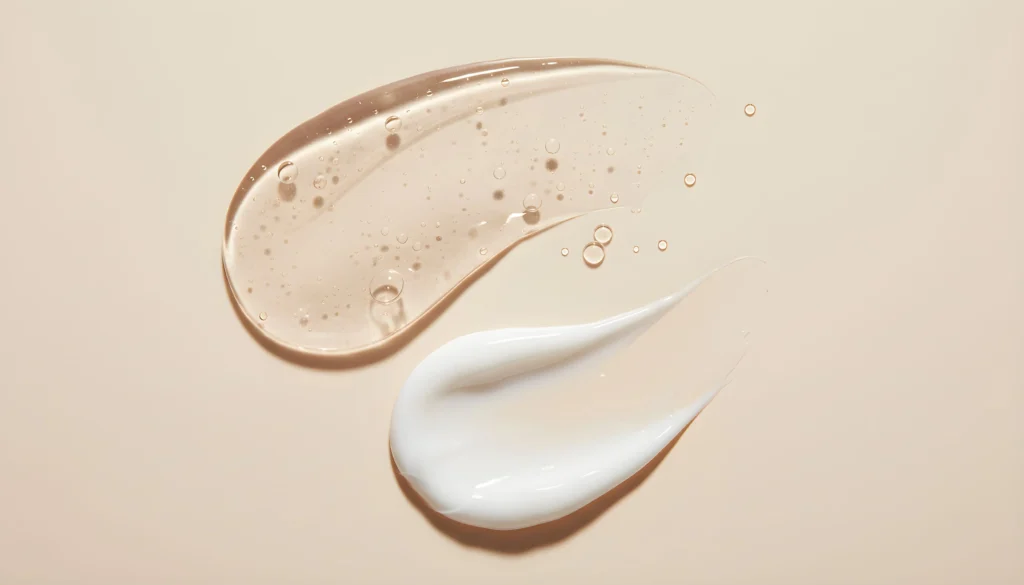
What’s the difference between a cream and a lotion? Creams are thicker and richer — better for dry, mature, or very compromised skin. Lotions are lighter and absorb faster — better for oily, combination, or everyday use in warm weather. Gels are the lightest and most appropriate for very oily or acne-prone skin.
What ingredients should I prioritize for anti-aging?Hyaluronic acid and collagen peptides are the two most impactful for hydration and firmness. Niacinamide adds barrier support and helps with uneven tone. Pair your moisturizer with a Vitamin C serum for antioxidant protection and collagen synthesis support — our Vitamin C Serum pairs especially well with our Collagen Peptide Cream.
How much moisturizer should I use? A pea-sized amount is typically enough for the face. More isn’t better — if your skin is still feeling dry, the issue is usually the formula rather than the quantity.
Should I use the same moisturizer morning and night?You can, but many people benefit from a lighter formula in the morning (easier to layer with SPF) and a richer one at night (when skin is in repair mode). Browse our moisturizers (creams and lotions) and gel and serum moisturizers to compare options.
Esthetic Formula, Inc. — Professional Skincare Since 1985 | estheticformula.com